The pace of technological change has moved from a steady walk to a full-speed sprint. As we find ourselves in 2026, the gadgets and systems we once viewed as futuristic concepts have finally landed in our hands, homes, and workplaces. We are no longer just looking at faster versions of old tools. We are seeing the emergence of entirely new categories of technology that blend the digital and physical worlds in ways that feel like magic.
From AI that thinks for itself to mirrors that check your health. This article dives into the “coolest” tech innovations that are defining life this year.
Agentic AI: The Evolution of the Digital Assistant
In the early 2020s, we were impressed by chatbots that could write essays or generate images. In 2026, the “assistant” model has been replaced by Agentic AI. Unlike previous iterations that required constant human prompting, these autonomous agents can reason. Plan and execute multi-step tasks from start to finish.
Today, your AI agent doesn’t just suggest a recipe; it checks your smart fridge’s inventory. Orders the missing ingredients from a delivery service, and sets your smart oven to the correct preheat temperature. In the professional world, these agents act as proactive team members—independently researching market trends, drafting reports. And even coordinating meetings across different time zones without human intervention. The “cool factor” here is the shift from a tool you use to a partner you trust.
Smart Glasses: The Mainstream Era of Spatial Computing
After years of prototypes and bulky headsets, 2026 is officially the year Smart Glasses went mainstream. Modern AR (Augmented Reality) spectacles now look almost indistinguishable from standard fashion eyewear, yet they overlay a layer of digital intelligence onto the physical world.
Imagine walking through a foreign city and seeing real-time translations of street signs floating in the air. Or following glowing navigation arrows on the actual pavement. These glasses use spatial computing to pin digital objects—like a virtual workstation. Or a holographic video call—to your physical environment. With intuitive gesture controls and eye-tracking technology, the “screen” is no longer in your pocket; it is everywhere you look.
Longevity Mirrors and Ambient Health Tech
The 2026 tech scene has moved beyond simple fitness trackers. One of the most talked-about innovations is the Longevity Mirror. Using a combination of advanced sensors and spectral imaging, these intelligent mirrors can estimate your physiological age and track subtle changes in your health just by analyzing your face.
By measuring skin elasticity, blood flow patterns, and even microscopic eye movements, the mirror provides a daily “longevity score.” This is part of a broader trend called Ambient Health Tech—technology that monitors your well-being without you having to wear a gadget. Sensors embedded in furniture and walls can now track heart rates and respiratory patterns, alerting users (or their doctors) to potential health issues long before symptoms appear.
Physical AI: Robotics with Common Sense
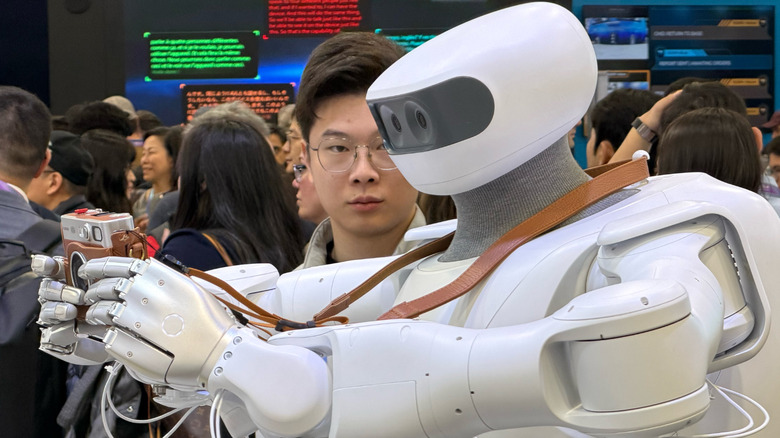
For a long time, robots were either rigid industrial machines or simple toys. In 2026, Physical AI has bridged the gap. By integrating large language models into humanoid and specialized robotic frames, machines have gained a sense of “physical common sense.”
We are seeing the first generation of domestic robots that can truly navigate the mess of a real home. These robots don’t just follow a pre-programmed path; they understand that a toy on the floor needs to be picked up or that a glass of water needs to be handled gently. Whether it is a “stair-climbing” robot vacuum or a humanoid assistant helping with elderly care, the coolest part of 2026 robotics is their ability to learn and adapt to human environments in real-time.
LiDAR-Powered Everything
While LiDAR (Light Detection and Ranging) technology was once the expensive secret of self-driving cars, in 2026, it is appearing in the most unexpected places. “Lawnbots” now use LiDAR eyes to create perfect 3D maps of your garden, allowing them to trim grass with surgical precision while avoiding pets and flowerbeds.
This technology is also being integrated into accessibility tools. Haptic-feedback canes and smart glasses for the visually impaired use LiDAR to detect obstacles in 3D space, providing tactile vibrations or audio cues to help users navigate complex urban environments with newfound independence. It is a prime example of high-end military and automotive tech being repurposed for everyday convenience and social good.
Conclusion: A Smarter, More Seamless World
The technology of 2026 is defined by its invisibility. The “coolest” products are no longer the ones that demand our constant attention with flashing lights and notifications; they are the ones that disappear into our lives while making us healthier, more productive, and more connected.
As AI moves from our screens into our physical reality, and as our health becomes something we monitor through a mirror rather than a medical appointment, we are witnessing a fundamental shift. We are no longer just “using” technology; we are living in a world that is intelligently responsive to our presence.