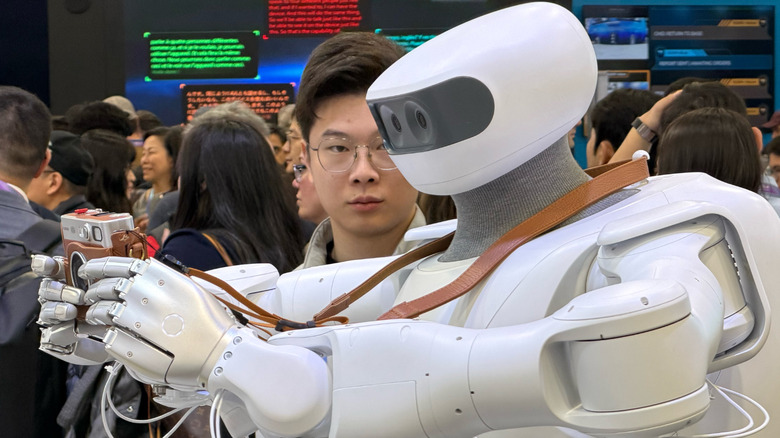
Navigating the Complexities of Technology Product Development

In the competitive landscape of the 2020s, a “great idea” is no longer enough to guarantee success. The graveyard of Silicon Valley is filled with revolutionary concepts that failed because of poor execution, lack of market fit, or technical debt. Technology Product Development (TPD) has evolved into a disciplined, multi-stage marathon that combines creative design, rigorous engineering, and psychological insight.

Whether it is a new mobile app, a wearable health tracker, or an enterprise AI platform, the journey from a whiteboard sketch to a polished product follows a sophisticated lifecycle. This article explores the essential stages of modern tech product development and the strategies used by top organizations to build products that resonate with users.


Phase 1: Ideation and Market Validation

Every product begins with a spark, but professional development begins with a “problem.” Successful tech products are rarely built because a feature is cool; they are built because a … Read more

Continue Reading

5 Revolutionary Smartphones Reshaping 2026

As we move deeper into 2026, the smartphone industry has shifted its focus from incremental hardware updates to profound artificial intelligence integration and revolutionary form factors. We are no longer just looking at faster processors or higher megapixel counts; we are witnessing the birth of devices that act as proactive personal assistants and pocket-sized creative studios.

The following five smartphones represent the pinnacle of mobile technology this year. Each brings a unique “X-factor” to the table, defining what it means to be a flagship in the current era.


1. Samsung Galaxy S26 Ultra: The King of Productivity

Released in early 2026, the Samsung Galaxy S26 Ultra continues to be the definitive choice for power users and enthusiasts. While the design remains iconic and sturdy with its titanium frame, the true magic lies within its display and processing power.

This year, Samsung introduced a new anti-reflective display technology that virtually eliminates … Read more

Continue Reading

How Computer Technology Reshapes Our Everyday Lives

In the span of just a few decades, computer technology has evolved from a specialized tool used by scientists and large corporations into the very fabric of human existence. It is no longer possible to discuss “daily life” without acknowledging the silicon-based heart that beats beneath it. From the way we work and learn to the way we form social bonds and manage our health, the influence of computer technology is both profound and permanent.

As we navigate the mid-2020s, the integration of technology has reached a point of invisibility; we often forget that the most mundane tasks—ordering groceries, checking the weather, or paying a bill—are powered by complex global networks and immense computational power. This article examines the multi-dimensional effects of computer technology on our daily lives, highlighting both the remarkable benefits and the challenges we must navigate.


Redefining Connectivity and Social Interaction

Perhaps the most visible effect of … Read more

Continue Reading

How Modern Computer Technology is Redefining Human Potential

In the span of a single human lifetime, computer technology has evolved from room-sized vacuum tube calculators to microscopic processors capable of trillions of operations per second. Today, we stand at a unique crossroads where classical computing is reaching its physical limits, while entirely new paradigms like quantum and neuromorphic computing are beginning to emerge. Computer technology is no longer just a sector of the economy; it is the fundamental operating system of modern civilization.

This article explores the current state of computer technology, the breakthroughs driving the mid-2020s, and how these advancements are fundamentally altering our relationship with information and reality.


The Architecture of Speed: Beyond Moore’s Law

For decades, the progression of computer technology followed Moore’s Law—the observation that the number of transistors on a microchip doubles approximately every two years. However, as we approach the atomic scale, traditional silicon-based chips face significant challenges, primarily regarding heat dissipation … Read more

Continue Reading

The Digital Frontier: Navigating Emerging Web Technologies

The internet is no longer a static collection of hyperlinked documents. We have moved far beyond the “read-only” era of Web 1.0 and the social-centric “read-write” era of Web 2.0. As we progress through the mid-2020s, the web is undergoing a structural metamorphosis. Driven by the need for greater privacy, immersive experiences, and machine-level intelligence, a new suite of emerging web technologies is redefining how we interact with the digital world.

For developers, entrepreneurs, and casual users alike, staying informed about these shifts is crucial. These technologies are not just trends; they are the new building blocks of the global economy.


The Rise of WebAssembly (Wasm) and High-Performance Web Apps

For decades, JavaScript was the undisputed king of web programming. While it remains essential, it has its performance limits, particularly for heavy computational tasks like video editing, 3D rendering, or complex simulations. Enter WebAssembly (Wasm).

WebAssembly is a … Read more

Continue Reading