Digital Divide: How AI Solutions are Reshaping Social Interaction

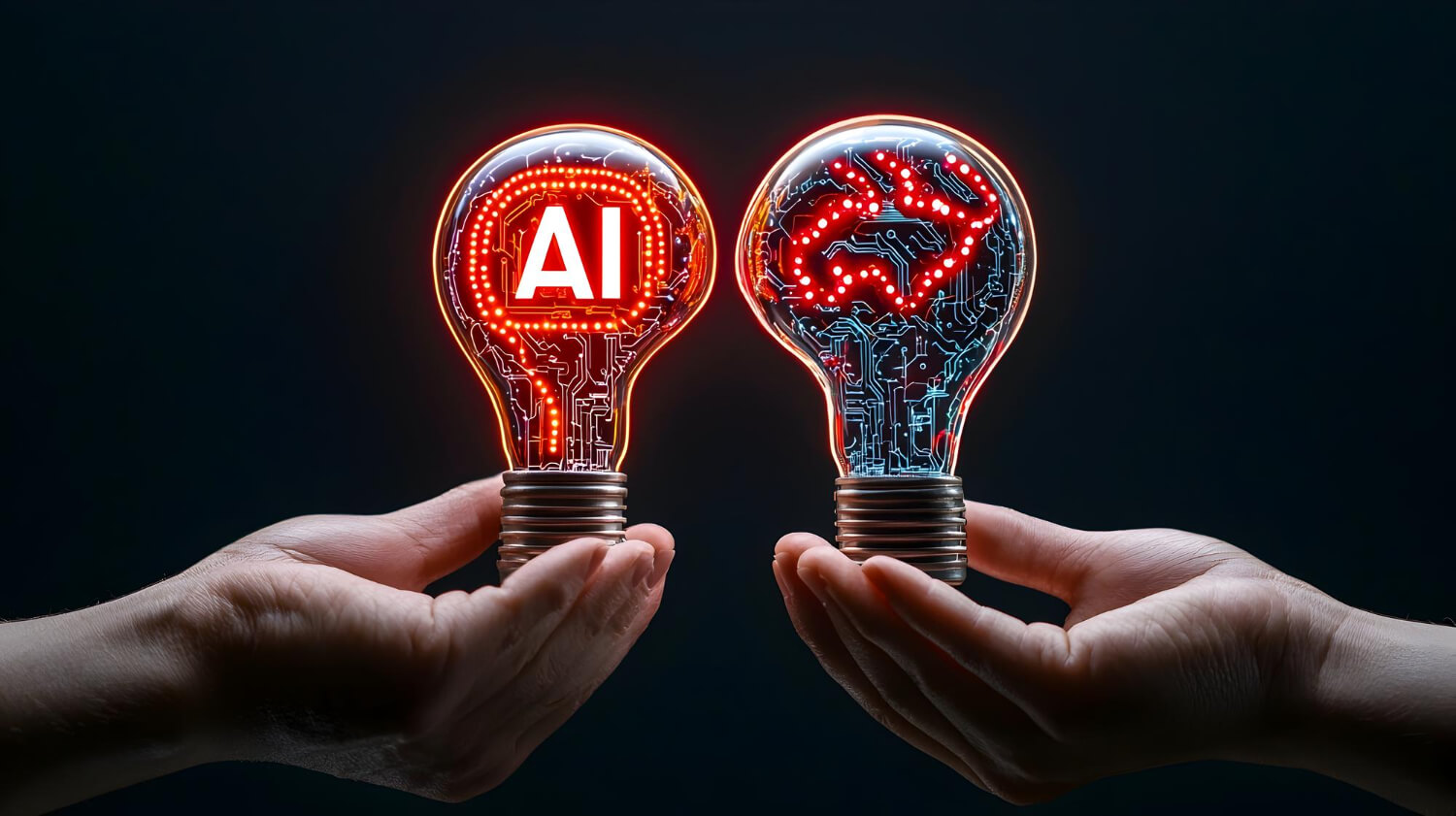
The history of human communication has always been intertwined with the tools we create. From the printing press to the telephone and the internet, every major technological leap has fundamentally altered how we relate to one another. Today, we are standing in the midst of the most significant shift yet: the integration of Artificial Intelligence (AI) into the fabric of our social lives.

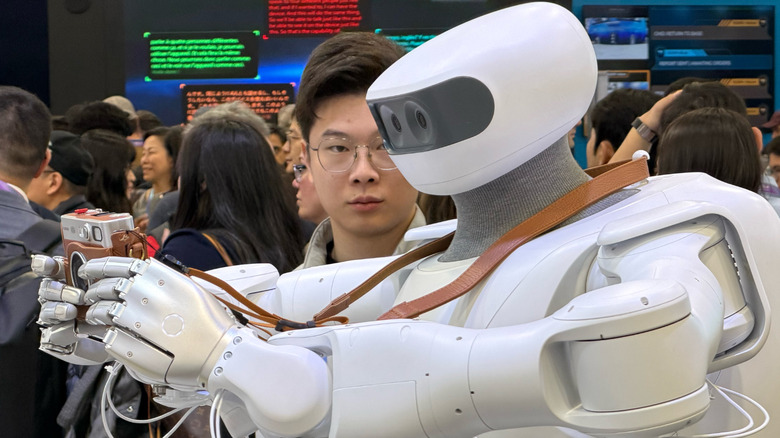
As we navigate 2026, AI is no longer just a backend tool for sorting data or optimizing search results. It has become a proactive participant in our social ecosystems. While there is much debate regarding the “dehumanizing” potential of technology, a new wave of AI solutions is emerging with a different goal: to enhance, facilitate, and even repair human social interaction.


Breaking the Language Barrier: Real-Time Universal Translation

One of the most profound barriers to global social interaction has always been language. In the past, connecting with … Read more

Continue Reading

Navigating the Complexities of Technology Product Development

In the competitive landscape of the 2020s, a “great idea” is no longer enough to guarantee success. The graveyard of Silicon Valley is filled with revolutionary concepts that failed because of poor execution, lack of market fit, or technical debt. Technology Product Development (TPD) has evolved into a disciplined, multi-stage marathon that combines creative design, rigorous engineering, and psychological insight.

Whether it is a new mobile app, a wearable health tracker, or an enterprise AI platform, the journey from a whiteboard sketch to a polished product follows a sophisticated lifecycle. This article explores the essential stages of modern tech product development and the strategies used by top organizations to build products that resonate with users.


Phase 1: Ideation and Market Validation

Every product begins with a spark, but professional development begins with a “problem.” Successful tech products are rarely built because a feature is cool; they are built because a … Read more

Continue Reading

How Computer Technology Reshapes Our Everyday Lives

In the span of just a few decades, computer technology has evolved from a specialized tool used by scientists and large corporations into the very fabric of human existence. It is no longer possible to discuss “daily life” without acknowledging the silicon-based heart that beats beneath it. From the way we work and learn to the way we form social bonds and manage our health, the influence of computer technology is both profound and permanent.

As we navigate the mid-2020s, the integration of technology has reached a point of invisibility; we often forget that the most mundane tasks—ordering groceries, checking the weather, or paying a bill—are powered by complex global networks and immense computational power. This article examines the multi-dimensional effects of computer technology on our daily lives, highlighting both the remarkable benefits and the challenges we must navigate.


Redefining Connectivity and Social Interaction

Perhaps the most visible effect of … Read more

Continue Reading

How Modern Computer Technology is Redefining Human Potential

In the span of a single human lifetime, computer technology has evolved from room-sized vacuum tube calculators to microscopic processors capable of trillions of operations per second. Today, we stand at a unique crossroads where classical computing is reaching its physical limits, while entirely new paradigms like quantum and neuromorphic computing are beginning to emerge. Computer technology is no longer just a sector of the economy; it is the fundamental operating system of modern civilization.

This article explores the current state of computer technology, the breakthroughs driving the mid-2020s, and how these advancements are fundamentally altering our relationship with information and reality.


The Architecture of Speed: Beyond Moore’s Law

For decades, the progression of computer technology followed Moore’s Law—the observation that the number of transistors on a microchip doubles approximately every two years. However, as we approach the atomic scale, traditional silicon-based chips face significant challenges, primarily regarding heat dissipation … Read more

Continue Reading

New Era: Navigating Technology in the 2025s

As we cross the threshold into the mid-2020s, the technological landscape is no longer defined by mere incremental updates. We have entered a decade of “convergence,” where artificial intelligence, physical robotics, and bio-engineering are merging to redefine the human experience. The year 2025 stands as a pivotal milestone. A year where technologies that once felt like science fiction have finally matured into essential infrastructure.

In this article, we explore the core pillars of technology in the 2025s. Examining how they are reshaping our industries, our daily lives, and our very perception of reality.


The Evolution of Intelligence: From Generative to Agentic AI

The early 2020s were dominated by “Generative AI”—tools like ChatGPT that could write, code, and create images. However, in the 2025s, the focus has shifted toward Agentic AI. Unlike its predecessors, which required constant human prompting. Agentic AI consists of autonomous systems capable of reasoning, planning, … Read more

Continue Reading